
0207 490 2311
Phone for sales and support

Jamie Harper
Spend days duking it out with synonyms, sometimes for global brands.
Why creating good written content is like scoring a symphony
Development
eCommerce
Design
Property
Copywriting
Careers
Web 101

Erik Satie was quite the character. For starters he insisted on eating only foods that were white: eggs, sugar, salt, shredded bones, animal fat, coconuts, rice, pasta, chicken, white cheese and certain kinds of fish. He also wrote some of the most beautiful and intricate classical piano arrangements the world has ever known.
Classical music is stirring stuff. It excites the emotions, rouses the heart and stimulates the spirit. It takes the listener on journeys from whisper-soft melody to thundering crescendo. Salt-scoffing Satie and fellow composers like Mozart, Beethoven and Tchaikovsky have brought the world some of the most epic, ornate and sensual music out there. Yet for all of its complexity, the building blocks of a symphony are astonishingly simple:
Notes.
Beautiful melodies build up one note at a time. And beautiful symphonies are just multi-layered sequences of individual notes, going about their business as they have done since cavemen began singing to each other. What’s mind-blowing is that this unit, the individual note, means next to nothing on its own.
You know when you get a melody stuck in your head? Imagine if you could take a mental-scalpel to that melody, separating the individual notes from one another. In isolation, not a single one of those individual notes would get your pulse racing. None of them would really have any meaning. You might be able to tell if each note sounded happy or sad, but that’s about it.
That’s because notes are meaningless without other notes around them. Individual notes are brought to life by those that come before and after. They provide context, purpose and the power to communicate. And that should all sound pretty familiar, because it’s the same deal with words.
Starters.
Shredded.
Certain.
Fish.
You read all of those words up there in the first paragraph, but they don’t mean much on their own.
To promote your business, your new sales idea or the app you’ve been moonlighting on, you need to write. And powerful, persuasive, precise writing is an art form. To create messages that leap off the page - messages that make your reader sit up and take notice - requires skill. You have to put the right words in the right place at the right time. It can be a perilous journey - and the laws of grammar can only take you halfway.
It starts with choosing the right notes. Do you want to sound serious or light-hearted? Playful or poker-faced? Sad or excited? Your writing needs a motif too: a recurring theme that weaves itself in and out of your piece. This will give your writing colour and structure - a set of ideas that you can cherry-pick from to illustrate your message. (The theme of this piece, for example, is classical music.)
What about the crescendo? The all-important payload that your piece builds to. Well that’s your call to action - or your summarising point. Oh and please let’s hear it for the unsung hero in all this. Playing the role of conductor is good old punctuation. Your commas, colons, full-stops and apostrophes that keep everything where it should be. Ordered. Controlled. Tidy.
Standing out in today’s content-filled world is not about making the loudest noise. It’s about creating little symphonies that are as imaginative, beautiful and engaging as you can muster. That’s how you rise above the noise from the wooden spoon and steel bin-lid brigade – i.e. the racket most businesses are making. And if you need a little guidance from a trained ear, try our copywriters. They’re wonderful composers.
As for Satie? He died of liver cirrhosis in 1925 at the age of 55. Turns out his hunger for weird food was surpassed only by his thirst for absinthe. His music lives on to this day.
More posts in:

Copywriting
Want persuasive copy? Stop thinking about yourself.
Question: People come to your website to read about your business, right?
Wrong.
They come to find the answer to a problem.
Copywriting
Why you should and shouldn’t write your own content
Sometimes the closer you are to something, the less you are able to see it.

Copywriting
Want to rank well in Google? Stop freaking out about keywords.
So you want to appease Google in a post-Hummingbird world? Keywords matter way less than most people realise.
Copywriting
Is your content really ignored? The truth about scan-reading online.
You know all that painstakingly crafted content on your website? Yeah, your visitors aren’t reading it. At least that’s what a number of experts would have you believe. Wrongly, in our opinion.

eCommerce
3 Mobile Commerce Trends To Watch
Mobile commerce or as m-commerce is here to stay. The industry has seen some major growth in the last two decades.

Design
Colour wheel basics
The colour wheel is comprised of 12 core colours or hues. Learning how to use this wheel can help make those art directed choices.

Development
Property
Local Space housing association site launch
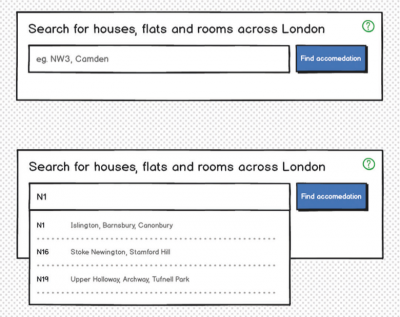
We have been working with the Local Space Housing Association group over the past few months, and are very happy to launch their new site for them and their tenants.
Design
Development
Property
Property showcase site, teaser #1
Over the next few days we will be building to our launch of our latest property showcase site.

Design
6 web design trends to look out for in 2014
This month, we have have decided to round up some trends appearing online for 2014.
Design
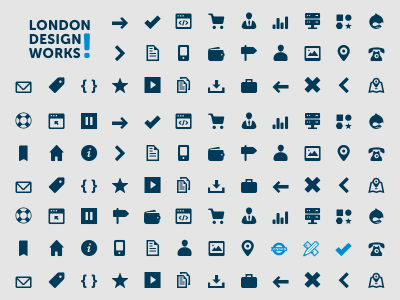
Freebie: The London Design Works 35 piece icon set
Today we are pleased to feature a set of 35 useful and beautiful web site icons.

Development
eCommerce
5 tips to a successful eCommerce site.
Creating a fantastic eCommerce site can be easier than you think with our top 5 tips to success.
eCommerce
Ways To Increase Customer Retention For Your Website
What does customer retention mean? It is the act of getting more customers to stay loyal to you and continue to buy from you overtime.
